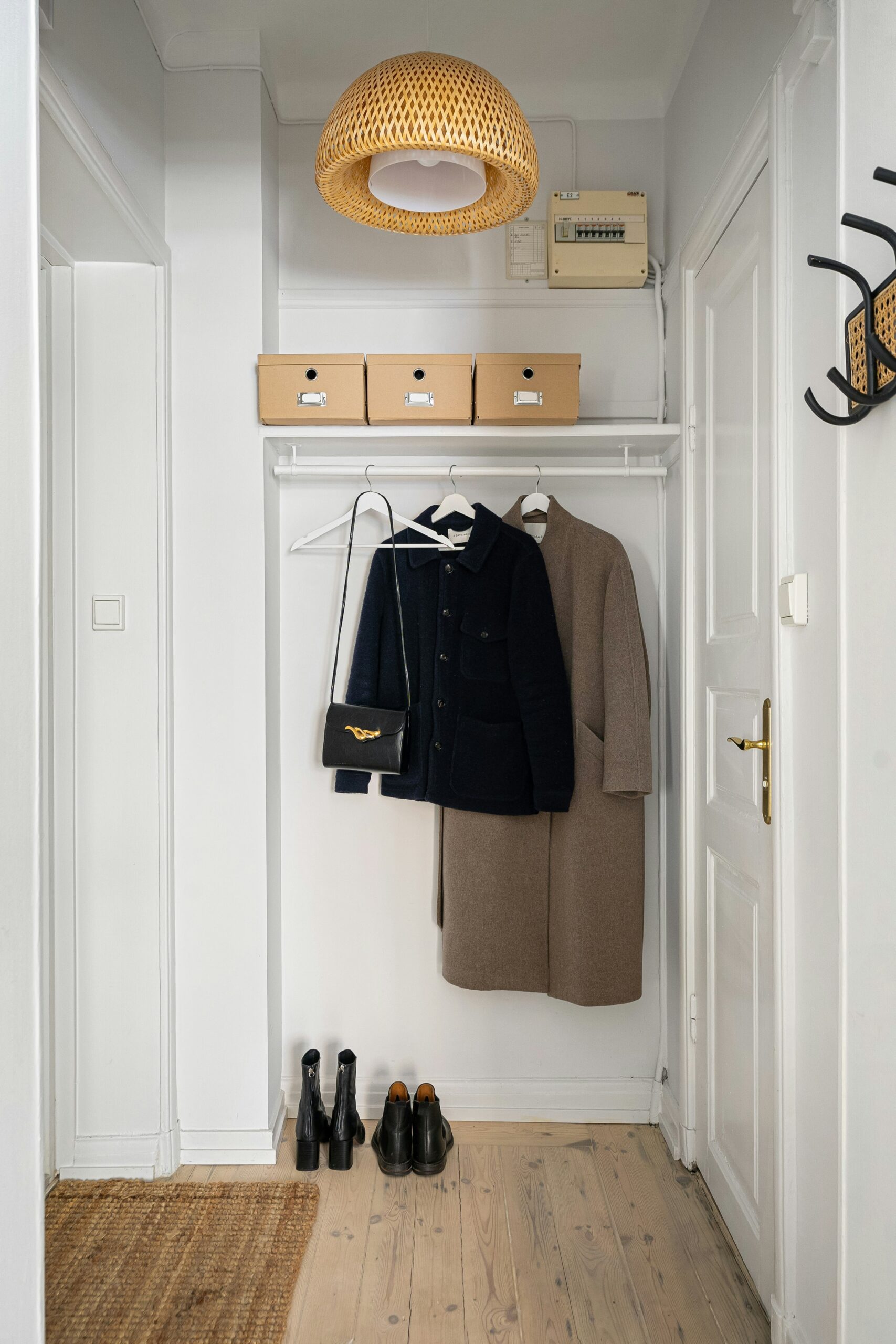
My rental doesn’t have a coat closet. It has a wall next to the front door and nothing else, which meant for the first few months, shoes, bags, and mail just piled up wherever they landed.
If you’ve read my bathroom, kitchen, or closet organization posts, you already know the pattern: nothing drilled, nothing permanent, everything reversible at move-out. An entryway is actually the easiest room in this series to fix, since most of the problem is habit, not square footage.
These are the 15 small entryway organization ideas for renters that turned my wall-by-the-door into an actual landing zone, grouped by exactly where they go.
Quick answer: the best small entryway organization ideas for renters use over-the-door hooks, adhesive strips, and freestanding furniture instead of anything mounted to the wall. A hook rack, a shoe bench, and a catch-all tray solve most of what makes a small entryway chaotic, and every piece leaves with you when you move.
Every small entryway organization idea for renters in this guide:
- On the Door
- On the Wall
- On the Floor
- Surfaces
- Extra Storage
On the Door
The door itself is the most underused surface in almost every small entryway. These three small entryway organization ideas start there.
1. Add an Over-the-Door Hook Rack
A hook rack that hangs over the top of the door itself holds coats, bags, and umbrellas without a single screw, the same way an over-the-door organizer works in a closet or pantry.
Check that it clears the door frame when the door closes, since some wider racks catch on the frame in a way that keeps the door from shutting fully.
Most hook racks hold four to six items, which is usually enough for one person’s daily coat and bag rotation without needing a second one anywhere else.
2. Add an Adhesive Key Hook
A small adhesive hook near the door, at a height you’ll actually use, means keys have exactly one home instead of ending up in a pocket, a bag, or lost in the couch.
Keep it out of sight from any window or glass panel near the door. Security researchers specifically recommend keeping everyday keys away from windows, since a visible set is an easy target for anyone looking in.
3. Hang an Adhesive Pocket Organizer for Bags
A hanging pocket organizer, the same style used as a closet or pantry hack elsewhere in this series, works just as well by the front door for bags, gloves, and scarves.
It hangs from a hook or over the door itself, so nothing about it touches the wall directly.
On the Wall
A little bit of wall space near the door goes a long way toward a functional small entryway.
4. Add a Wall-Leaning Coat Rack
A freestanding coat rack that leans against the wall under its own weight, rather than one that bolts to a stud, handles coats and jackets without any hardware at all.
Look for one with a wide enough base that it doesn’t tip when a heavy winter coat gets added to a hook near the top.
Most wall-leaning racks hold four to eight coats depending on the model, so count how many people actually need hooks before choosing a size.
5. Add an Adhesive Pet Leash Hook
If you have a dog, a single adhesive hook at the right height means the leash has one obvious spot instead of getting left on the floor or draped over a doorknob.
Keep it to leash weight only. It isn’t rated for anything heavier, like a bag of pet food.
6. Add an Adhesive Wall Pocket for Mail
A slim adhesive wall pocket catches incoming mail before it piles up on a counter or the floor, giving it one visible, obvious spot near the door. Like the other adhesive pieces in this series, it comes away cleanly if you follow the manufacturer’s official removal instructions.
Sort it weekly rather than letting it fill up completely, or it just becomes a second, tidier-looking pile instead of solving the first one.
On the Floor
Floor space by the door usually takes the most abuse in a small entryway, from wet shoes to dropped bags. These small entryway organization ideas for renters handle that without a single tool.
7. Add a Slim Shoe Bench
A narrow shoe bench, sized for a small entryway rather than a full mudroom, gives you somewhere to sit while taking shoes off and stores several pairs underneath at the same time.
Measure your available floor width carefully before buying, since even a few extra inches can be the difference between fitting and blocking the door.
A bench with a slightly higher seat, around eighteen inches, is easier to use daily than a very low one, especially if you’re putting shoes on while holding a bag or coffee.
8. Add a Boot Tray
A boot tray catches water, mud, and salt from wet shoes before it reaches the floor, which matters more in a rental than almost anywhere else, since flooring damage often comes straight out of a deposit.
It also creates a loose visual boundary for where shoes belong, which genuinely does cut down on stray shoes ending up everywhere else.
9. Add an Umbrella Stand or Bin
A simple bin or a dedicated umbrella stand gives wet umbrellas somewhere to drip dry that isn’t directly on the floor or leaning against a wall.
Anything with a small drainage tray at the bottom is worth the extra few dollars, since it protects the floor underneath it too.
Surfaces
A single small surface near the door does more for a small entryway than almost anything else on this list.
10. Add a Slim Console Table
A narrow console table, even one only six or eight inches deep, adds a surface for keys, mail, and a bag without eating into your actual walking space.
Freestanding means it’s fully portable too, so it can move to a different spot, or a different apartment, without any changes needed.
A table with a small drawer adds even more use out of the same footprint, giving you somewhere to tuck sunglasses or a spare mask out of sight.
11. Add a Catch-All Tray
A simple tray or shallow bowl on whatever surface you have gives keys, your wallet, and loose change one obvious home instead of scattering across counters and pockets.
This is the cheapest idea on this entire list, and often the single most-used one within the first week.
Extra Storage
A few more small entryway organization ideas for renters that solve specific problems the rest of this list doesn’t quite cover.
12. Add a Freestanding Coat Rack
A tall, freestanding coat rack works well in an entryway with more floor space than wall space, holding several coats and bags on one footprint that’s easy to move.
It’s one of the few pieces on this list that can move to a bedroom or office corner later if your entryway needs change.
A rack with a weighted or wide base matters more here than almost anywhere else on this list, since a tall, top-heavy rack is the one most likely to tip in a busy, high-traffic spot.
13. Add a Storage Bench with Baskets
A bench with open cubbies or baskets underneath combines seating, shoe storage, and general catch-all storage in one freestanding piece.
It takes up more floor space than a slim shoe bench, so measure carefully if your entryway is genuinely tight.
Look for baskets that pull out fully rather than ones fixed in place, since a basket you have to reach into blindly gets used far less than one you can slide out and see into.
14. Add an Outbox Bin
A small bin near the door, used only for things that need to leave the apartment — library books, dry cleaning, packages to return — means they actually leave instead of getting buried.
Check it every time you head out. An outbox only works if you actually look inside it on your way past.
The System That Actually Makes This Stick
Every idea on this list works better with one habit behind it: everything gets exactly one home, and it goes back to that home every single time, not just when the entryway is already a mess.
This is sometimes called a landing pad system, and it’s the real reason some entryways stay organized for years while others need reorganizing every few months.
None of these 15 small entryway organization ideas for renters will hold up long-term without this one habit sitting underneath them.
How Much Small Entryway Organization for Renters Actually Costs
Most individual small entryway organization ideas for renters on this list cost under twenty-five dollars, and a few — the adhesive hooks, the catch-all tray — cost less than a coffee.
A starting budget of thirty to fifty dollars covers a hook rack, a key hook, and a catch-all tray, which are the three highest-impact fixes on this entire list relative to their cost.
Mistakes to Avoid With Small Entryway Organization for Renters
Don’t add every idea on this list to a genuinely tiny entryway at once. Overcrowding a small space with storage solutions just replaces one kind of clutter with another.
Give adhesive products their full cure time, usually an hour or more, before hanging anything on them, the same as everywhere else in this series.
Sort catch-all trays and mail pockets weekly. Without a regular reset, they fill up completely and stop doing their job within a month.
Measure your door swing before adding an over-the-door rack. A rack that’s too deep can hit a wall or a piece of furniture every time the door opens fully.
Don’t skip weight ratings on adhesive pet leash hooks specifically. A tugging dog puts more sudden force on a hook than almost anything else on this list, and it’s the one most likely to fail without a proper rating check first.
Quick Shopping List for Small Entryway Organization
Everything from this list of small entryway organization ideas for renters in one place:
- Over-the-door hook rack
- Adhesive key hook
- Adhesive pocket organizer for bags
- Wall-leaning coat rack
- Adhesive pet leash hook, if needed
- Adhesive wall pocket for mail
- Slim shoe bench
- Boot tray
- Umbrella stand or bin
- Slim console table
- Catch-all tray
- Freestanding coat rack
- Storage bench with baskets
- Small bin for outgoing items
For more renter-friendly projects, browse the Home Organization section, including the bathroom, kitchen, and closet guides in the same series.
Where to Start
None of this needs a drill, a landlord’s approval, or a weekend you don’t have. Start with whichever pile is currently the biggest complaint in your entryway.
For most small rental entryways, that’s shoes and keys, so a hook rack and a catch-all tray are worth doing first. The rest of this list of small entryway organization ideas for renters can wait until those two are already working.
Frequently Asked Questions
Will these small entryway organization ideas for renters damage my door or walls? Not if you use them as directed. Over-the-door racks hook onto the door itself with no hardware, and adhesive products come away cleanly from paint and most doors when removed slowly. Test on a hidden spot first.
What’s the single best fix for a chaotic entryway? A catch-all tray for keys and your wallet. Of every small entryway organization idea for renters on this list, it costs almost nothing, takes zero setup, and solves the single most common daily frustration, which is not knowing where your keys are.
Do over-the-door hook racks fit every door? Most standard interior and front doors, yes, but measure the door’s thickness and check the swing clearance first, since a bulky rack can catch on the frame or nearby furniture.
How do I stop mail from piling up even with a mail pocket? Sort it on the same day every week, ideally right when you get home. A mail pocket only prevents pile-up if it actually gets emptied regularly, rather than slowly becoming a second, tidier-looking pile.
Can I use these ideas in a shared entryway or hallway? Some of them. Over-the-door and freestanding pieces work well; adhesive wall items are worth checking with roommates or a landlord first if the entryway counts as shared or common space.
Is it worth buying all 14 items on this list? No. Start with a hook rack, a key hook, and a catch-all tray, then add the rest only if a specific problem — wet shoes, umbrellas, mail — is still bothering you afterward.
How long does it take to set up an entryway system like this? The core pieces — a hook rack, a key hook, and a catch-all tray — usually take under an hour combined. Furniture pieces like a bench or console table depend on assembly, but everything else on this list is genuinely quick to add.